
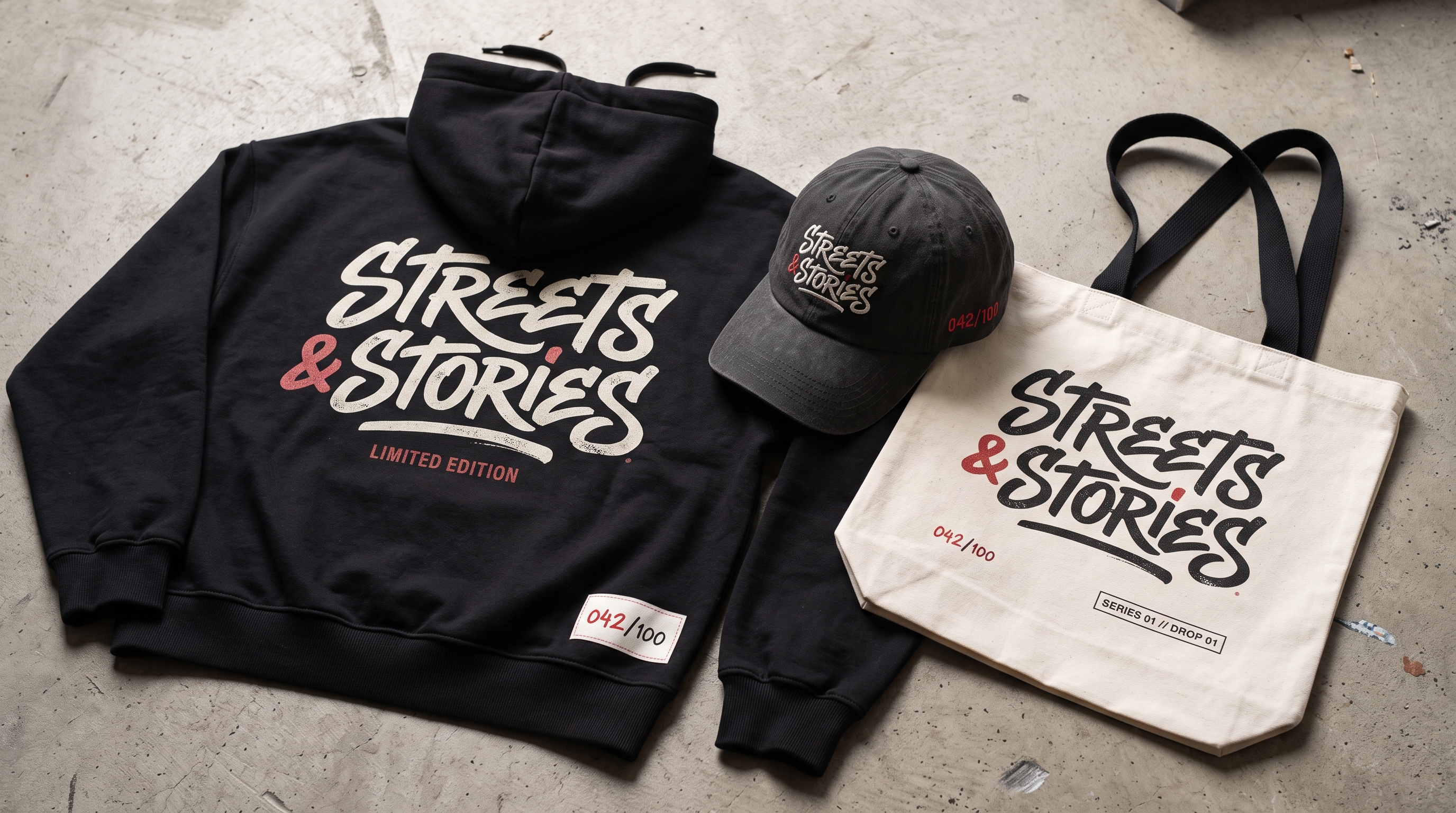
Limited edition merch works because it gives people a reason to act now and a story to tell later. The strongest examples from this fall come from music, fashion and fast food, but the mechanics are simple enough for any B2B marketing team to borrow.
Here is what three very different 2026 drops show about how to plan limited edition merch that earns attention instead of landing in a drawer.
What Is a Merch Drop, and Why Does It Work?
A merch drop is a short, announced release of a small run of product, usually sold or given out in one place or one window. The format borrowed from streetwear, where scarcity and timing are part of the product itself.
It works because it changes the question. A giveaway asks someone to accept something. A drop asks someone to go and get it. That difference shows up in effort, in memory and in how often the item gets shared.
OutKast x Waffle House: Make the Launch an Event
On October 2, OutKast and Waffle House launched a limited merch collection at a downtown Atlanta location, with shirts, hats and hoodies carrying combined logos and a slogan lifted from a lyric on the group's 2000 single. According to GPB, hundreds of fans lined up before sunrise, and the first customer arrived at 4 a.m. for an 11 a.m. start.
The launch party also served limited-edition meals named for the two members of the group. The product, the food and the location all pointed at the same shared reference, which gave fans something specific to quote and post.
The B2B takeaway: pair your merch with a moment and a place. A customer summit, an office opening or an anniversary gives the drop a reason to exist. Our guide to conference swag attendees actually keep shows how to build that around an event.
BTS: Design Details People Can Talk About
During its ARIRANG world tour, BTS has paired with food, sportswear and fast-food brands. ContentGrip reports limited OREO cookies with 13 anniversary embossments, tour-exclusive Nike merch with city-specific customization, and collectible toys in McDonald's Happy Meals, alongside an estimated $1 billion in tour-related revenue through HYBE.
Notice how small the design hooks are. A number, a city, an emboss. Each one gives a fan something to screenshot, compare and repost, which extends the campaign well beyond the launch day.
The B2B takeaway: build in details people can discuss. Number the run, add the city or the event date, or put a small hidden mark on the product. These cost almost nothing and make the item feel specific.
ComplexCon: Trade an Experience for the Merch
ComplexCon marks its 10th anniversary on October 3 and 4 in Los Angeles. Complex lists Lexus offering free drinks alongside exclusive merchandise, Toyota and Awake NY running a photo experience with limited-edition gear, and Cash App building a fishing game that hands out exclusive merch. Ray-Ban and Fragment are also releasing an ultra-limited eyewear collaboration.
None of these brands published results, so treat them as a format rather than a proven return. The pattern is still useful: the merch is the reward for taking part, not an item on a table.
The B2B takeaway: gate your best item behind a small action, such as a demo, a short game or a booked meeting. People value what they earn.
Why Quality and Understanding Beat Hype
Scarcity only helps if the item is worth wanting. A July 2026 survey of 903 Gen Z consumers from Rival Technologies, published through Marketing Dive, found that 80% cite product quality as a loyalty driver, while only 11% say brands understand them really well. Those who feel understood were unconditionally loyal at 45%, compared with 5% for those who feel misunderstood.
For a drop, that means design the item for the person receiving it. Our 2026 merch design trends post covers what that audience actually wears.
Plan It Like a Campaign, Fund It Like One
New PPAI data from May 2026 finds 47% of marketers consider branded merchandise a core marketing channel, yet only 21% treat it as core to their budget. The gap is where a well-planned drop can earn its place.
Budget pressure is real too. Adobe data reported by Retail Dive shows holiday shoppers leaning toward essentials and value this year. That favors a small, high-quality run over a large pile of throwaways, which is the logic behind our post on why fewer, better swag items win.
A Simple Drop Checklist
Use this to plan your first limited edition merch release:
- Pick the moment. Tie it to an event, milestone or launch.
- Limit the run. Make the number real and say it out loud.
- Add a discussable detail. A number, a city, a date or a hidden mark.
- Make people earn it. Gate the best item behind a small action.
- Choose one or two great items. Quality beats variety.
- Plan the afterlife. Decide where photos and posts will live and who will share them.
If you want a partner to help design and fulfill a drop, see our guide to brand collaboration merch on a small budget or reach out to the Maisonette team to plan one for your next launch.