
Brand collaboration merch looks like a big-company move: two recognizable logos, a launch campaign, a waitlist. That reading misses what actually drives the results, which is why the format works just as well at 40 people as at 40,000.
The mechanism is not reach. It is audience overlap plus a real reason for the two brands to be in a room together.
Stack Audiences, Do Not Average Them
In August, Texas A&M and Buc-ee's launched their first co-branded merchandise, starting with a single maroon tee sold at 20 Buc-ee's locations and the campus bookstore. Both are brands whose fans already buy shirts unprompted. The founder of Buc-ee's is a 1980 Aggie, so the connection was true before the product existed.
That is the test. Do not ask who has the biggest following. Ask whose audience already buys merch, and whether there is a genuine reason the two of you are connected.
Solve a Specific, Slightly Ridiculous Problem
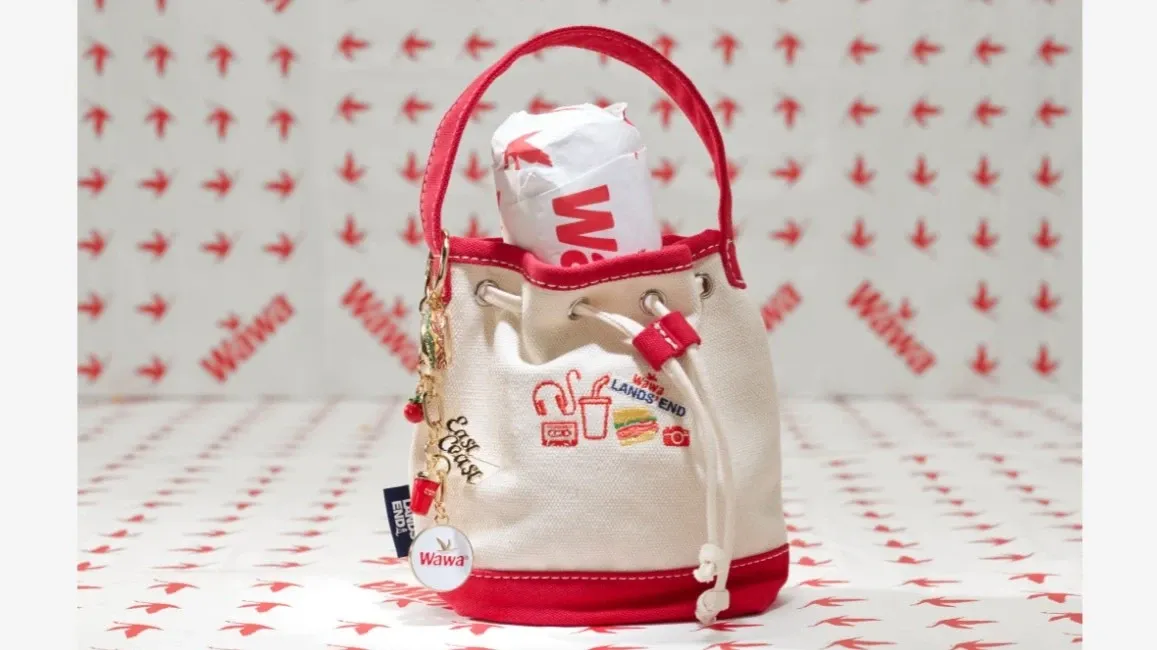
Lands' End and Wawa released a beach tote engineered to carry a Wawa Shorti hoagie. It sold out online in two hours and sent people driving to New Jersey stores to find remaining stock.
Nothing about that product was expensive or complicated. It was specific. A generic tote with two logos on it would have done nothing, and the difference between the two versions is one insight about how that brand's actual customers behave.
Borrow Taste, Not Just Reach
Parke, a TikTok-born lifestyle label, partnered with licensed sports apparel maker '47 on a collegiate collection covering nine schools. The institutions brought the licensing and the audience. Parke brought the aesthetic.
For a small company, this is the most transferable version of the model: hire the taste and keep the logo restrained. A designer or small label with a real following will make your merch look like something people want, which is not a job an internal brand guideline does well.
Build a Price Ladder Into It
Target's Kuromi x KATSEYE capsule ran apparel from $10 to $30 with collectibles starting at $6.99. Ulta and Pacsun structured their 2026 collab as a two-way distribution deal, with product sold in both retailers rather than just co-branded.
Both are useful for a small brand. A low entry price gets people in, and a partner's distribution is worth more than a partner's follower count. Our startup merch guide covers what to make first if this is your opening move.
The Cautionary Tale
Vans pulled an entire nine-piece collection this summer after a backlash over its Fugazi collaboration, when fans read it as the band breaking a decades-old no-merch stance. The credibility being borrowed had not been earned, and the correction was expensive and public.
Before signing anything, ask what the other brand's most committed fans will assume when they see the two names together. If the honest answer is that they will feel something was taken from them, the reach is not worth it.