
A new hire's first day is one of the few moments where a company has someone's full attention. Most employers spend it on paperwork. The ones who get it right send something instead, and the best employee welcome kit ideas share a trait that has nothing to do with budget: every item earns its place.
The test is simple. Six months later, is the person still using it? If the answer is no for most of the box, the kit was a cost, not an investment.
What Makes a Welcome Kit Work
A good kit does three jobs at once. It signals that the company pays attention to detail. It gives a new hire something to show people, which is free brand reach. And it removes small friction from the first week.
What it should not do is announce itself as swag. The moment a kit feels like leftover conference stock, it stops communicating care and starts communicating the opposite.
Employee Welcome Kit Ideas by Category
One piece of apparel worth wearing
Apparel is the highest-visibility item in any kit and the easiest to get wrong. Pick something a person would wear on a weekend, not just at a company offsite. That usually means a heavier-weight fleece or a well-cut tee in a color that isn't screaming. Keep the logo small.
Drinkware that earns desk space
An insulated bottle or a good ceramic mug gets used daily for years. This is the single best value item in a new hire welcome kit, and it is worth spending more here than anywhere else in the box.
Something for the desk
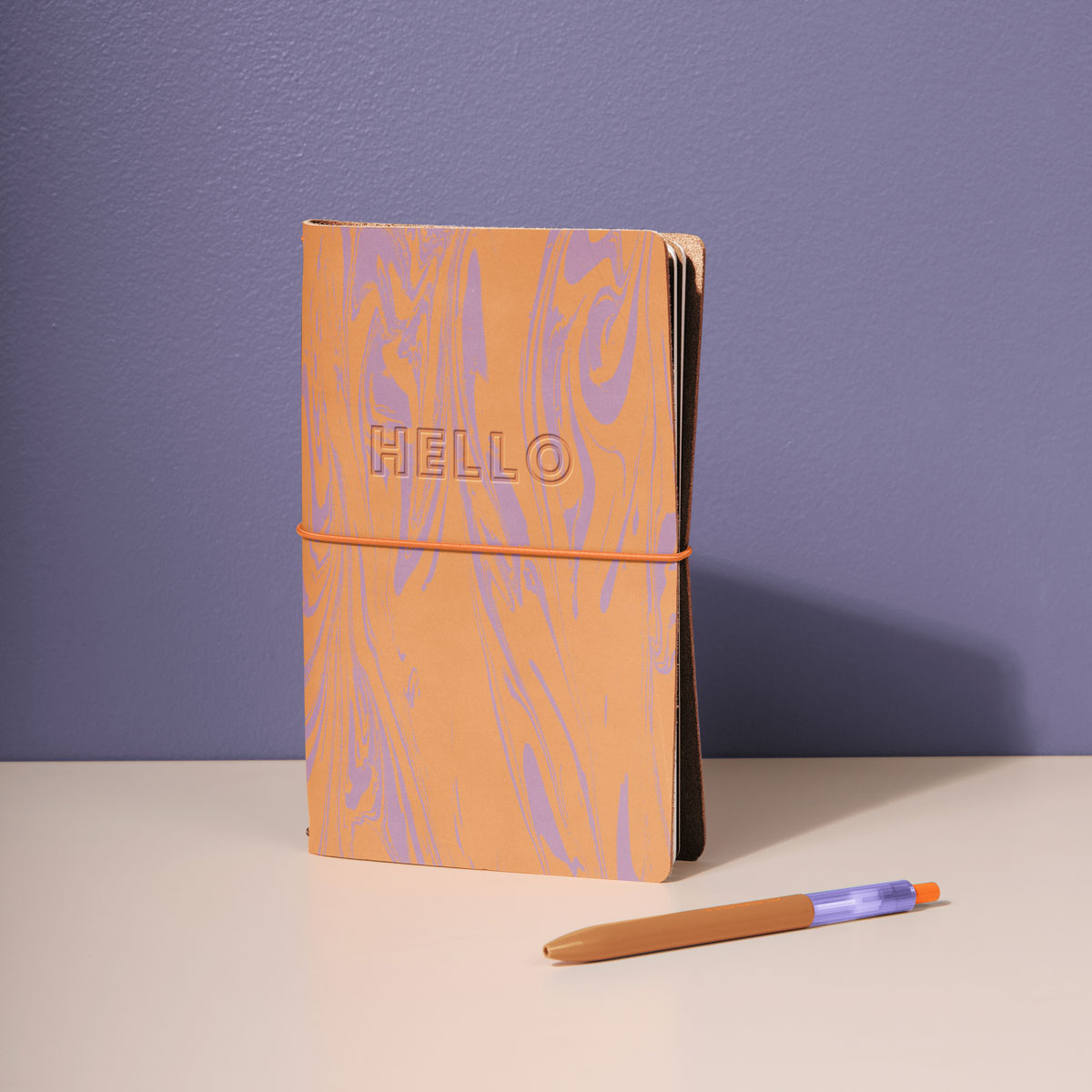
A notebook that feels good to write in, a quality pen, a cable organizer. Small, useful, and the category where quality is most obvious to the person holding it.
One unexpected item
This is what separates a kit from a starter pack. Something tied to your specific company: local coffee from the city you were founded in, a book your leadership team hands out, a snack everyone in the office is opinionated about. It costs little and it is the thing people photograph.
What to Leave Out
Onboarding swag goes wrong in predictable ways. The most common offenders:
- Cheap plastic anything. Pens that skip, water bottles that leak. One bad item colors the whole box.
- Volume for its own sake. Three excellent items beat seven mediocre ones every time.
- Oversized logos. Branding should be a detail, not the design.
- Sizing guesswork. If apparel is in the kit, ask for the size. A shirt that doesn't fit is a gift that becomes a chore.
What a Welcome Kit Should Cost
Most companies land between 35 and 75 dollars per hire, and the spread has more to do with apparel than anything else. Below 35 it gets difficult to include a piece someone genuinely wants to wear. Above 100 you are usually paying for packaging rather than contents, which is worth it for executive hires and rarely worth it at scale.
The better frame is cost per year of use. A 40 dollar kit that someone reaches for daily for three years is one of the cheapest brand impressions a company will ever buy.
Packaging Is Half the Gift
The same four items in a branded box with tissue and a handwritten card read completely differently than the same four items in a poly mailer. Unboxing is the moment the kit actually happens, and it is the cheapest place to add perceived value.
Include a short note from someone real. Not the company. A person.
Getting It Right the First Time
Welcome kits are one of the few onboarding investments that keep working long after the first week. Start with fewer, better items, get the sizing right, and put the money into the pieces that get daily use. The rest is packaging and timing.