
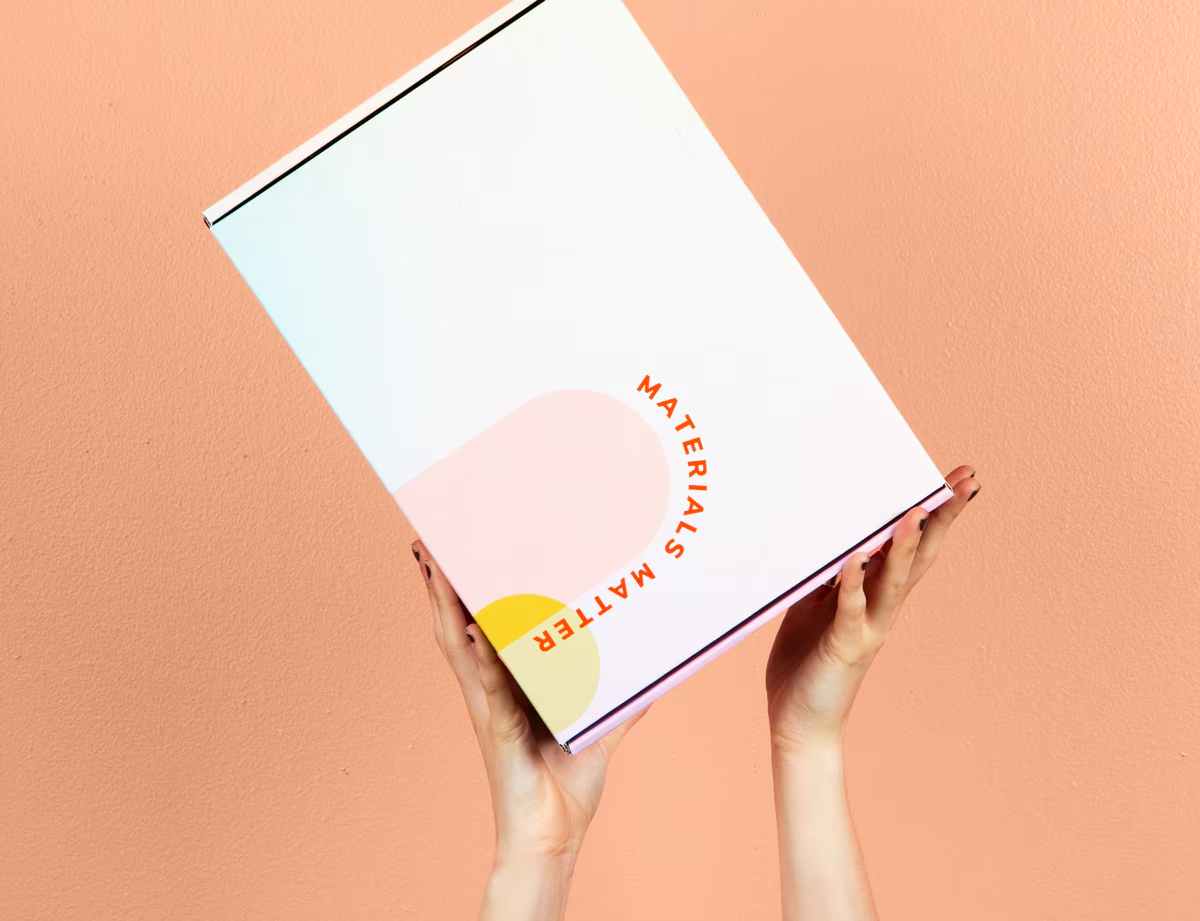
Direct mail was supposed to be finished. Instead it now claims roughly a quarter of marketing budgets, and physical inserts are being named a primary results driver. The channel did not survive on nostalgia. It survived because the math got embarrassing for everyone else.
Direct mail averages about a 4.4% response rate. Email averages 0.12%. Dimensional mail, meaning a box or package with something physical inside, lands between 6% and 12%.
Why Dimensional Direct Mail Works
A box cannot be filtered, batched, or scrolled past. It has to be opened, and it is almost always opened by the person whose name is on it. That is a level of guaranteed attention no digital channel can sell you at any price.
There is also a reciprocity effect that flat mail does not trigger. Something arrived, someone chose it, and a reply now feels like the natural response rather than a favor. Gifting campaigns report response rates between 8% and 27% against 1% to 2% for cold outreach.
Where It Earns Its Cost
Dimensional mail is expensive per unit and cheap per outcome, which makes it wrong for volume and right for concentration. Roughly 47% of B2B marketers name dimensional mail and gifting as their top ROI driver among all account-based marketing tactics.
Use it where the deal size justifies it: enterprise accounts stuck in a stall, target logos you have never reached, renewals worth protecting, and executives who never open a cold email but always open a package.
How to Build the Mailer
One item, chosen properly
Resist the sample pack. A single well-made object communicates confidence. A box of five cheap things communicates a budget being spent.
Make the connection legible
The item should relate to the message. A gift that references the recipient's actual situation, industry, or recent news outperforms a generic premium product at twice the cost. Ping Identity built a campaign on a steak-themed pun and generated over $1M in pipeline with 150% more meetings.
Write the note by hand
A printed insert reads as fulfillment. A handwritten card reads as a person. This costs almost nothing and changes the whole register of the package.
Build the follow-up before you send
The mailer is the opening, not the campaign. Hybrid physical and digital sequences report 68% higher engagement and close about 29% faster. Know who calls, when, and with what line, before a single box ships.
What It Costs to Do Properly
A serious dimensional mailer usually lands between 60 and 150 dollars per unit once you account for the item, custom packaging, printing, and shipping. That number frightens people until it is compared to the alternative. A single qualified enterprise meeting typically costs more than that through paid channels, and converts worse.
Budget by target account rather than by list size. If you cannot name the twenty accounts a campaign is aimed at, you are not ready to send anything.
Track It or Skip It
Every mailer should carry a way to close the loop: a personalized landing page, a QR code, or a delivery notification that triggers outreach the same day. Send-day and delivery-day timing is the highest-leverage variable most teams ignore.
The reason direct mail budgets are climbing is that logistics became the differentiator. Knowing exactly when a box lands turns a mailing into a sequence.
Start Small and Concentrated
The most common mistake is running dimensional direct mail like a broadcast. Fifty boxes to a named target list, with real follow-up, will outperform a thousand sent to a purchased one. Pick the accounts that matter, spend properly on each, and treat the send date as the start of a conversation rather than the end of a campaign.